
Puzzle Time: Brainy Challenge
JoyGame StudioPuzzle
4.9118.00 Reviews
- Version
- 1.0.6
- Installs
- 5.00M
- Age Rating
- Teen
Screenshots





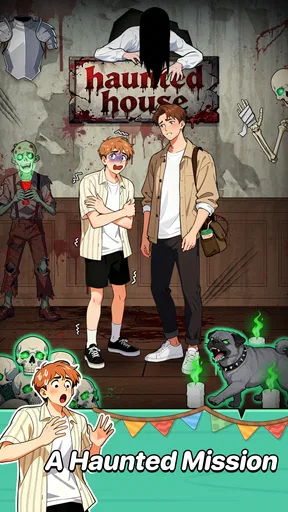


Our Review of Puzzle Time: Brainy Challenge
 Analysis by Appyee
I spent my first sessions with Puzzle Time: Brainy Challenge treating it exactly as its name suggests: a small mental break rather than a game demanding a full evening. That distinction matters. This is a free puzzle game from JoyGame Studio, aimed at quick bursts of thinking and carrying a Teen content rating. Its simple premise makes it easy to open when I have a few spare minutes, but the more important question is whether that convenience survives after the first week.
My early impression was positive because the game does not ask for a large commitment before becoming useful. I could approach it between errands, during a quiet coffee, or when I wanted something more active than scrolling. The store summary presents it as light brain-teasing entertainment, and that description fits the role it plays better than any grand claim about mastery or competition would. It is a casual puzzle option for people who want to wake up their attention without starting a long campaign.
From the first week to a lasting habit
I judge a quick puzzle game by whether it still fits my day once the first curiosity has worn off, not by whether I can turn it into a daily obligation. For Puzzle Time, I’d keep sessions tied to a real pause—waiting for an appointment or taking a seated break—so the challenge stays intentional. That practical routine also makes it easier to tell when a different kind of game would suit me better.
Why the opening sessions work
The first-week appeal comes from low friction. Puzzle games often lose me when they bury the actual challenge under elaborate menus, long tutorials, or a story I have to remember. Here, the attraction is the directness of solving. I can sit down with a short window of time, focus on the problem in front of me, and stop without feeling that I have abandoned a larger adventure.
That makes it especially suitable for people who enjoy compact mental tasks. If you like testing pattern recognition, concentration, and flexible thinking, the format can feel refreshing. It also works for someone who wants a gentle alternative to action games. The Teen rating is worth keeping in mind for families choosing games for younger players, even though the central appeal is clearly puzzle solving rather than social play or a dramatic narrative.
I found the best early routine was to play when my attention was available but not unlimited. A short session before work can act as a mental warm-up; a few rounds after dinner can be a calmer replacement for aimless phone use. The game is not trying to become the center of my day, and that restraint is one of its strengths during the novelty period.
What makes it useful in everyday life
A realistic example is a delayed appointment. Instead of opening a social feed and losing track of time, I can use Puzzle Time for a compact challenge, then close it when my name is called. The same approach works during a commute if I am seated and have enough attention to spare. I would not use it while walking, driving, or doing anything that needs awareness, but it fits those small inactive gaps that are otherwise difficult to fill well.
There is also a useful difference between playing to win and playing to reset. When I approach a puzzle as a performance test, a difficult moment can become irritating. When I treat it as a short concentration exercise, even an imperfect attempt has value. That mindset helps the game stay approachable, especially on days when I do not have the patience for a demanding strategy title.
The current version is 1.0.4, and the game has already attracted over 5 million installs. Its average rating is 4.9 from around 12 thousand ratings, which suggests that the compact puzzle format is connecting with a large audience. I still would not treat popularity as proof that it suits everyone. Puzzle preferences are personal, and a highly rated quick-play game can feel shallow to someone looking for deep systems or a substantial progression path.
How I would build a routine around it
For recurring value, I would avoid turning every spare moment into a session. One practical method is to choose a fixed window, such as a short break in the afternoon, and stop when the break ends. This preserves the game’s role as a mental refresh rather than allowing it to become another source of automatic phone checking.
A second method is to change the purpose of each session. Some days can be about speed and instinct; other days can be about slowing down and examining possibilities. This prevents the experience from becoming a repetitive reflex. With puzzle games, the quality of attention often matters more than the number of rounds completed, so playing less frequently but more deliberately can make the habit feel fresher.
I also recommend not using it as the only game on a device. Puzzle Time works best as a compact tool in a broader mix. A longer strategy game offers deeper planning, while a word game may provide a different kind of language-focused challenge. Keeping those roles separate makes it easier to notice what this title does well instead of expecting it to satisfy every gaming mood.
Where the month-to-month value may weaken
The central long-term question is variety. A quick puzzle game can be excellent during the first week because every interaction feels new and the basic challenge is easy to revisit. After several weeks, however, the same compact structure may feel less rewarding if I am not discovering fresh ways to think about it. That is not a flaw unique to this title; it is the usual trade-off of focused casual puzzle design.
Players who enjoy a clear campaign, character development, large strategic decisions, or a strong sense of destination may find the experience too narrow over time. A traditional brain-training application may be better for someone who wants structured categories and measurable routines. A premium puzzle game may be a better choice for someone who values carefully designed worlds and a finish line. Puzzle Time is more appealing when the goal is repeatable, lightweight stimulation rather than a major long-term project.
Its free price lowers the risk of trying it, but it also changes how I judge its staying power. I do not need the game to replace every other form of entertainment. I only need it to remain a pleasant option when I want a brief challenge. That is a modest standard, but it is the right one for this kind of release.
The maintenance burden is small, but not zero
Maintaining a useful habit with this game requires more self-management than technical effort. I would keep notifications, if present on my device, from deciding when I play. A puzzle should be something I choose for a break, not a reason to interrupt work or conversation. The healthiest setup is to open it intentionally, play within a limit, and leave without chasing an abstract sense of completion.
It also helps to notice when I am solving mechanically. If I am tapping through challenges while thinking about something else, the game is no longer providing the attention reset that made it attractive. At that point, I would either pause for the day or switch to a different kind of activity. Continuing out of habit can turn a light game into background noise.
For families, maintenance includes checking whether the Teen rating fits the intended player. I would not hand the game to a child solely because it is a puzzle title. The age guidance is part of the product information and should be considered alongside the individual player’s maturity and the household’s expectations.
Specific habits that extend its usefulness
One non-obvious advantage of a small puzzle game is that it can serve as a transition between tasks. I would use a brief session after finishing a demanding piece of work, not before every task, because it creates a clean mental boundary. The important trick is to stop while the break still feels short. If the session expands indefinitely, it defeats the purpose of using the game as a reset.
Another useful approach is to treat mistakes as information about attention rather than intelligence. When I miss an obvious pattern, the problem may be fatigue, distraction, or rushing. Recognizing that makes the game a simple way to check my mental state. If errors increase and enjoyment drops, taking a real break is more valuable than forcing another attempt.
A third trade-off concerns difficulty tolerance. Casual players may appreciate the accessible rhythm, while experienced puzzle fans may want more demanding escalation. I would recommend trying it during a low-pressure period first. If the challenges feel satisfying without becoming stressful, it can earn a place in a daily routine. If they feel too easy almost immediately, a deeper puzzle title will probably provide better month-to-month value.
What can cause fatigue
The main source of fatigue is not necessarily the act of solving; it is repetition without a fresh reason to return. A game built for quick mental breaks can start to feel interchangeable with other short distractions once the initial curiosity fades. I noticed that the appeal depends heavily on my mood. On a tired day, a small challenge feels manageable. On a day when I want a serious intellectual workout, it may feel underpowered.
Another possible friction point is the absence of a broader personal goal. Some players stay engaged because they are building a collection, improving a ranking, following a story, or mastering a complex system. A focused puzzle game has less room for those motivations unless its challenge itself remains compelling. That means the lasting audience is likely to be people who enjoy the act of solving, not people who need extensive rewards around it.
There is also a risk in judging every session by success. If I become annoyed whenever I need more than one attempt, the game stops being a break. I get better results by allowing myself to pause, rethink, and return later. This is particularly important for users who already spend much of the day on tasks that demand constant performance.
How it compares with familiar alternatives
Compared with a word puzzle, Puzzle Time: Brainy Challenge is the better fit when I want broader visual or logical attention rather than vocabulary practice. A word-focused game can be more satisfying for language lovers, while this title is more suitable when I want to work through a compact reasoning problem without relying on spelling knowledge.
Compared with a large strategy game, it is far easier to enter and leave. I do not need to remember a complicated plan or protect a long-term position. The trade-off is depth: strategy games usually give me more meaningful decisions and a stronger sense of development. I would choose Puzzle Time for a spare moment and a strategy game for an evening when I want sustained involvement.
Compared with a dedicated brain-training app, this game feels like entertainment first. Someone seeking a carefully organized cognitive routine may prefer an app built around schedules, categories, and progress tracking. Someone who dislikes formal exercises may prefer Puzzle Time because it makes the mental work feel more like play. Neither option is automatically superior; the right choice depends on whether structure or spontaneity keeps the user returning.
Who should make room for it
I would recommend it to casual puzzle fans, commuters who need a short seated activity, and people trying to replace a few minutes of passive scrolling with something that asks for attention. It is also a reasonable first choice for someone who wants a free game without committing to a large download-driven adventure or an involved strategy system.
I would be more cautious about recommending it to players who need a rich narrative, competitive depth, extensive customization, or a clearly measurable training program. Those users may enjoy the first sessions but move on quickly once the immediate novelty disappears. The same is true for anyone who finds repeated short challenges unsatisfying without a larger progression framework.
JoyGame Studio has positioned the release in a useful space: approachable enough for quick breaks, but still centered on thinking rather than passive consumption. The fact that it is free makes experimenting easy, while the Teen rating means families should make an intentional age decision rather than assuming every puzzle game is universally suitable.
My long-term verdict
After the novelty fades, I do not see Puzzle Time: Brainy Challenge as a game that must occupy a permanent, daily slot for everyone. I see it as a dependable small option that earns its place when I use it with a purpose. Its lasting value comes from convenience, approachable mental stimulation, and the ability to fit into ordinary gaps without demanding a major time investment.
For me, the deciding factor is moderation. Used as a short reset, it remains pleasant and practical. Used continuously in search of a deeper progression system, it is more likely to feel repetitive. That makes the game easy to recommend, but with a clear condition: choose it for quick puzzle sessions, not as a replacement for a full-featured long-term game.
With over 5 million installs and a 4.9 average, it has clearly found an audience, and I understand why. The strongest reason to try it is not the size of that audience, though; it is the simple everyday fit. If you want a free puzzle game for brief, focused breaks and can accept a lighter long-term structure, Puzzle Time: Brainy Challenge deserves a trial. If you need escalating depth, a story, or a robust training plan, I would look elsewhere after testing the opening sessions.
Privacy and Permissions
See what permissions an app requests and how it handles your data.
- Wi-Fi connection information
- view Wi-Fi connections
- Other
- view network connections, full network access, control vibration, prevent device from sleeping, Google Play license check
Verdict
Strengths of Puzzle Time: Brainy Challenge
- Short levels make it easy to play during quick breaks.
- Gradual difficulty keeps the challenge approachable for new players.
- Simple controls are suitable for both phones and tablets.
- Offline play is useful when traveling or without a connection.
- The variety of puzzles helps prevent the gameplay from feeling repetitive.
Limitations of Puzzle Time: Brainy Challenge
- Some puzzles may feel too easy for experienced players.
- Hints can reduce the satisfaction of solving difficult challenges.
- Progression may feel slow if new content unlocks gradually.
- Small visual details can be harder to notice on compact screens.
- Replay value may be limited after completing the available puzzles.
Other Releases by JoyGame Studio
View All
Brain Puzzle: Tricky Quest
Puzzle4.6

Brain Puzzle 3: Crazy Mind
Puzzle4.7

Brain Puzzle 2: Logic Twist
Puzzle4.7
Similar Picks in This Category
View All
Block Blast!
HungryStudio4.8

Braindom: Brain Games Test
Lahana Game Studio4.6

AMAZE!
CrazyLabs LTD4.6

Sudoku - Classic Sudoku Puzzle
Oakever Games4.7

Art Puzzle - Puzzle Games
Easybrain4.8

Amaze GO!
Oakever Games4.9
Frequently Asked Questions
What is Puzzle Time: Brainy Challenge?
Puzzle Time: Brainy Challenge is a casual puzzle game designed for short, engaging play sessions. It presents players with logic-based challenges that require observation, pattern recognition, memory, or quick problem-solving. The game is suitable for users who enjoy testing their thinking skills without committing to a long story or complicated controls. Its simple format makes it approachable for both beginners and experienced puzzle fans.
Is Puzzle Time: Brainy Challenge free to download and play?
The game can generally be downloaded at no initial cost, allowing players to try its core puzzles before deciding whether they want to spend money. However, free puzzle games commonly include advertisements, optional in-app purchases, or extra content that may require payment. Before downloading, check the store listing for the current pricing model, available purchases, and whether any features are restricted behind a premium option.
Does Puzzle Time: Brainy Challenge require an internet connection?
An internet connection may be needed for the first download, updates, advertisements, cloud features, or purchases. Some individual puzzles may remain playable offline, which is convenient when traveling or when mobile data is limited, but offline availability can vary by version and device. If offline gaming is important to you, test the application after installation with Wi-Fi and mobile data disabled.
Is Puzzle Time: Brainy Challenge suitable for children?
Puzzle Time: Brainy Challenge may be appropriate for children because its main focus is problem-solving rather than complex action or mature storytelling. Nevertheless, parents should review the age rating, advertising content, privacy information, and in-app purchase settings before allowing a child to play. Difficulty, reading requirements, and the presence of timed challenges can also affect whether the game suits a particular child.
What devices are compatible with Puzzle Time: Brainy Challenge?
Compatibility depends on the current Android or iOS version published by the developer, as well as the available storage and hardware on your device. Most recent smartphones and tablets should handle a lightweight puzzle game smoothly, but older devices may experience slower performance or may not be supported. Check the official store page before downloading to confirm operating-system requirements and the latest compatibility details.
Play our best games!


